
The indoor trampoline park industry has taken off over the past decade like a giant leap through the air. Both kids and adults enjoy bouncing around and playing games on trampolines, and they are willing to pay for the experience. Jumping on trampolines is not only fun, but it’s also a great way to get in shape. NASA research confirms that 10 minutes of jumping on a trampoline is a more efficient cardiovascular exercise than over 30 minutes of running.
If you’re thinking about opening a trampoline park or enhancing the one you have, now is a great time to get started. Parents are on the lookout for healthy and fun activities for their kids. Likewise, health-conscious adults can’t wait to add some fun and adventure to their workout routine. Owning a commercial trampoline park can be a rewarding, profitable experience, especially as the indoor park industry continues to grow.
Before starting a trampoline park or upgrading a current park, you will need to have a plan in place. It seems simple in theory, but there’s plenty more to consider and figure out. To develop a strong trampoline park business plan, you’ll have to know what supplies you will need to run your business, who your customers will be and who will serve your customers.

Photo by cottonbro on Pexels.com 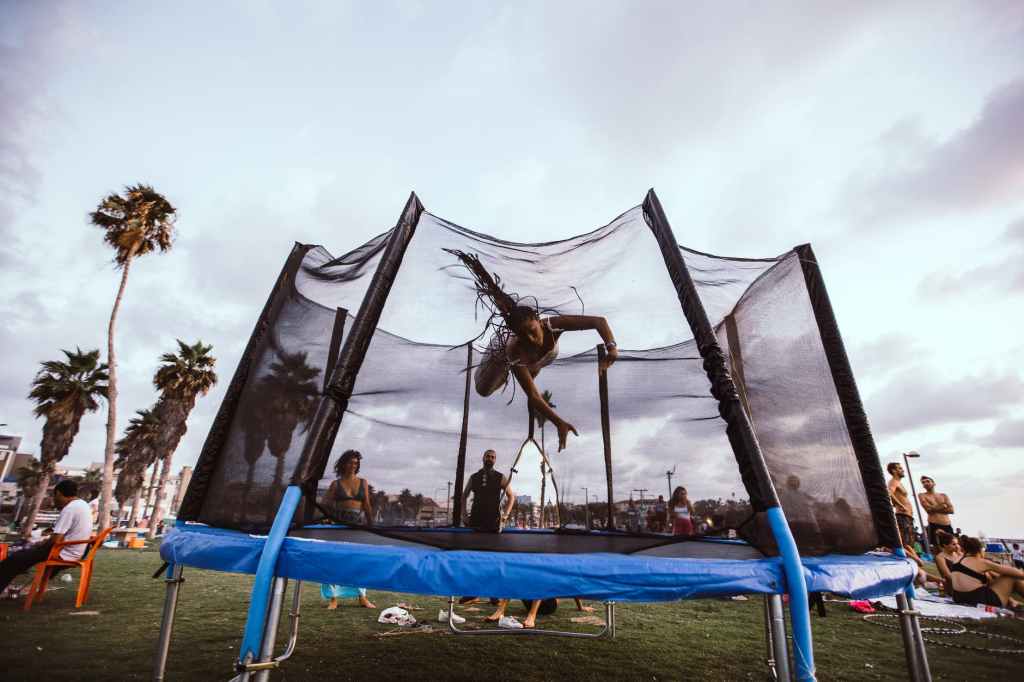
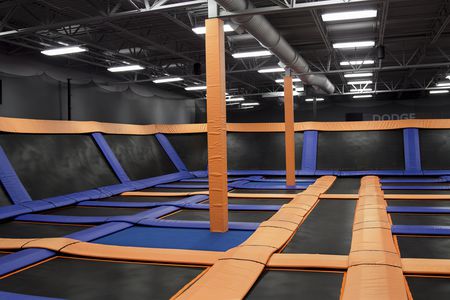
Photo by Adi Perets on Pexels.com
What is a Trampoline Park?
Trampoline Park is an area comprising one or more institutional trampolines or a series of institutional trampolines. A trampoline intended for use in a commercial or institutional facility. This includes, but is not limited to:
- Foam Pits – A single trampoline or series of trampolines that dismount into a common pit would collectively be considered one trampoline court.
- Basketball – A single trampoline or series of trampolines that have a basketball element within the devise use zone would collectively be considered one trampoline court.
- Dodgeball – A single trampoline or series of trampolines that are used for playing dodgeball would collectively be considered one trampoline court. (Note: Some facilities contain two or more distinct/separate dodgeball courts. Each distinct/separate court should be counted as one court.
- Air Bags – A single trampoline or series of trampolines that dismount into an inflatable airbag would collectively be considered one trampoline court
- Chambered Trampoline – A small commercial trampoline unit that consists of one or more individual stations and employs individual chambers divided with small mesh netting to control or direct the descent of a patron.
Trampoline Park Business Overview
Trampolines were developed in 1934 and originally used to train astronauts and athletes. However, trampolines became popular with the general public once people realized simply how much fun they are.
Trampolines took off around 2004 when the first indoor trampoline park opened. Since then, trampoline parks have grown into a billion-dollar industry, with about 700 parks worldwide.
Indoor trampoline parks are highly popular and continue to grow because they appeal to all ages. They offer a healthy way to have fun with friends, family and other people in the community. People don’t just jump at trampoline parks either — they also play games like dodgeball or basketball, making it even more fun and engaging for visitors.
How Does a Trampoline Park Make Money?
A trampoline park business charges customers a fee for jumping on trampolines for a certain amount of time. For example, you might charge customers $10 for an hour, and $15 for two hours. You might also charge customers to rent gear, like special jump socks. Lastly, you can offer snacks and drinks or other forms of entertainment to further increase your profit (and to provide additional energy for your guests!).
Who’s the Target Market?
Trampoline parks offer fun and fitness for adults, children and families. With that said, trampoline parks are still mostly kid-focused, and they provide the perfect solution for parents who want to find a healthy activity for their kids. Also, kids love to have birthday parties at an indoor trampoline park, and parents enjoy the convenience of hosting a birthday party outside of their home. Overall, families with disposable income will be your target market.
What Location Is Best?
The best way to find the ideal location for your indoor trampoline park is to first research the competition. Competition can be fierce in a city where numerous trampoline parks already exist, so it may be best to distance yourself from those locations. However, plenty of cities and towns still don’t have an indoor trampoline park, which can be a perfect opportunity for those looking to enter the business. Even an out-of-the-way location can attract customers because most people are willing to drive to have a unique and fun experience.
You also need to consider the building you wish to use for your business and make sure it’s appropriate for trampoline park use. Naturally, indoor trampoline parks require high ceilings and a large open space as your guest bounce to new heights. A former industrial building or warehouse, for example, maybe the perfect spot. Other areas to consider when choosing your location include whether parking will be readily available for your customers, and what the nearby businesses are. For instance, if you can lease a large building near a supermarket, parents will appreciate being able to shop and have fun with their kids all in the same location.
How Do You Design and Manufacture a Trampoline Park?
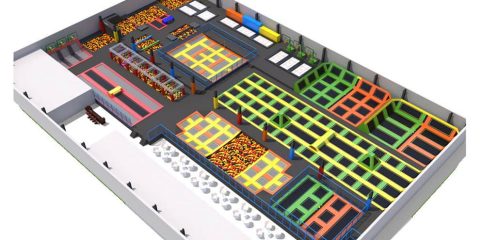
According to the International Association of Trampoline Parks (IATP), business owners want a building that has a minimum of 18,000 square feet. The ceiling height must be 17 feet measured from the floor to the lowest obstruction in the building. Taller is typically better, but if you meet the minimum requirement then you’re in the clear.
On average, most trampoline parks in the U.S. are between 25,000 and 35,000 square feet. Overall, the trampoline court should occupy an average of 45 to 50 per cent of the total square footage. With the extra space, you’ll have room for a lounge, bathrooms and other entertainment options if you wish to expand your business in the future. You want to design the layout to keep food areas, restrooms and check-in separate from the trampoline court.
The actual trampoline area should consist of about 50 to 60 trampolines. The trampolines will be connected and surrounded by cushioning so that jumpers will either fall onto another trampoline or on top of a cushion no matter which way they fall.
To manufacture the trampoline park, you’ll first want to find a reputable builder. Leave it to the pros: a trampoline park builder will use licensed contractors, engineers and other professionals to ensure they’ve created a durable, high-quality park. Alternatively, you might also be able to purchase an already existing trampoline park so you do not need to build a completely new park.
Costs to Build a Trampoline Park
The first step to funding your indoor trampoline park is to develop a business model. A trampoline park business model will state what your company offers that is of value to customers in a way that sets you apart from competitors. It should also include startup costs, the sources of your finances, your marketing strategy and projected revenue and expenses.
Initial costs to build a trampoline park are usually high because they require a custom-built trampoline court. According to the IATP, it requires an average initial investment of $1.2 million to $1.8 million to open a trampoline park. Equipment costs typically include the following:
- Trampoline flooring: You can purchase units by the square foot for around $60 to $100, or you can buy a pre-built trampoline floor which may cost anywhere from $10,000 to $50,000.
- Basketball hoops: Basketball hoops may cost anywhere from $20 to $50 each.
- Toys: Basketballs, soft footballs and various other toys may cost a trampoline business owner anywhere from $100 to $500.
- Refreshments: Drinks and snacks may range from $1,000 to $2,000 to get started. Common refreshment options include bottled waters and sports drinks, fountain drinks, fruit, candy, soft pretzels, and pizza.
- Trampoline socks: Trampoline jumping socks cost anywhere from $40 to $100, depending on the quantity you purchase.
To save on manufacturing costs, contact several contractors and get quotes so you can compare them before making a choice. If you can find a building that already has the space requirements for a trampoline park, you’ll be off to a good start.
What Are the Funding Options?
There are several ways to find funding for your indoor trampoline park. Every year, thousands of entrepreneurs open new businesses with a little help. Here are just a few financing options for your business:
- Use your savings: The easiest way to finance a company is to tap into your checking or savings account. Though it can be a significant out-of-pocket cost, using your own money also shows your dedication to your business to potential investors, which may help secure additional funding in the future. You might sell personal assets to fund your business as well.
- Use credit cards: Credit cards may come in handy to purchase necessary items for your business, but keep in mind that credit cards come with high interest rates. If you choose to use credit cards, make sure to go with one that offers rewards programs for businesses to get a bit back from your spending.
- Get a bank loan: You may be able to obtain a bank loan for your business, but these can be challenging to get. One nice thing about a bank loan is that they typically offer lower interest rates than a credit card.
- Borrow from friends or family: Borrowing from friends or family is a popular option for business owners and can be an easy way to obtain funding. Make sure to sit down with them and go over loan terms such as how much is to be borrowed, the interest charged and repayment. Make sure everything’s in writing for reference.
- Apply for a Small Business Administration (SBA) loan: You may be eligible for an SBA-guaranteed loan. Through the SBA, you may be able to borrow as much as $5 million — more than enough to start a trampoline park. Certain restrictions apply, and you must comply with SBA standards. If you choose to go this route, an SBA lender can guide you through the process.
- Get a microloan: If you have most of the funds you need but need to fill a gap, you may be eligible for a microloan ranging from $500 to $35,000. A microlender, instead of a bank, is usually more flexible with loan requirements. However, they tend to charge slightly higher interest rates than banks.
- Reach out to an angel investor: If you can’t get a loan or don’t have enough assets, you may be able to find someone interested in investing in your business. An angel investor is an individual who will invest in your business usually in exchange for an equity stake in the new company.
- Use crowdfunding: You might consider using a crowdfunding website to raise money for your business. Friends, family and strangers can use the site to donate money and help you reach your goal. It helps to promise donors something in exchange, and you’ll need a good story to generate excitement about your business.
How Much Profit Does a Trampoline Park Make?
Initial costs are high to open a trampoline park, but the profits can be high, too. For example, one trampoline park in California has an annual profit of $780,000. Some big names in the industry make millions in total annual revenue.
It’s up to you how much you want to charge customers per hour to jump on trampolines. However, consider your location. If your business is in a high-rent area, you may be able to charge slightly higher than average. On the other hand, if your business is in a low-rent area, you might want to charge lower than average to better fit the demographic.
The most substantial expenses for running a trampoline park include rent, maintenance and labour costs. You’ll also need to pay for insurance, marketing and utilities. If you become a certified service technician through the IATP, you’ll be able to maintain your trampoline park on your own.
You can drastically increase profits and keep families in the facility longer by adding concessions and other forms of entertainment. No matter what you do, you can typically expect to wait an average of eight to 12 months to see a return on your investment.
 Art Infos